 Nill Mostakim
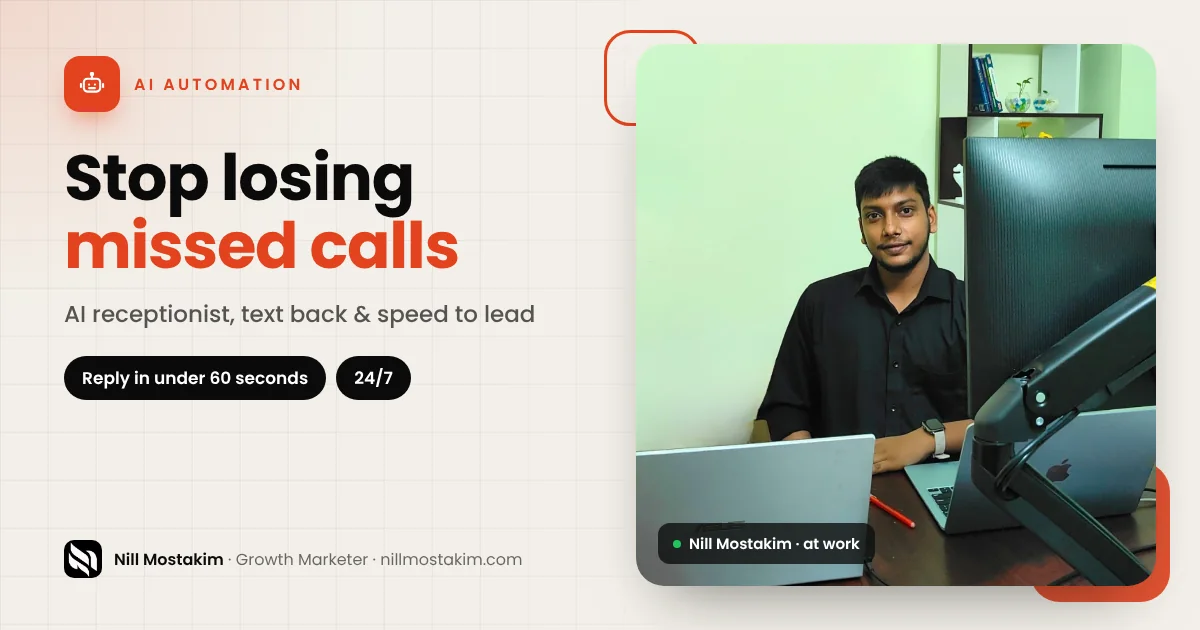
Here's a pattern I see in almost every new account. The ads are fine. The cost per lead is fine. But when we listen to the call recordings, a chunk of the calls were never answered, and the form leads got a reply the next morning.
You paid for those leads. Then you let them go to the next business on the list.
That's the problem AI automation fixes, and it's why searches for "ai receptionist" in the US have exploded in 2026. Google Keyword Planner shows around 8,100 searches a month through spring, then 90,500 in July and 450,000 in August. "Speed to lead" gets around 880 a month, and "missed call text back" around 480.
Why the first reply wins
When someone needs a plumber, a dentist or a lawyer, they rarely contact just one. They call two or three, or fill in a couple of forms. Whoever replies first and sounds helpful usually gets the job.
This hits local businesses hardest because the owner is often on a job site, in a treatment room or in court. The phone rings, nobody can pick up, and the lead calls the next ad down.
It also costs you on Google. Local Services Ads rank businesses partly on how responsive they are. A business that misses calls gets shown less.
If you're paying for leads, the cheapest way to lower your cost per job is to stop losing the leads you already paid for.
The four automations that matter most
You don't need a complicated system. These four cover most of the money:
1. Missed-call text back
When a call goes unanswered, the caller gets a text within seconds: "Sorry we missed you, this is Mike from ABC Plumbing. What do you need help with?" Most people reply, and now you have a conversation instead of a lost lead.
2. Instant form and message replies
Every website form, Facebook lead form and LSA message gets an immediate text and email confirming you got it, with a next step. Then your team gets an alert with the lead's details.
3. AI receptionist for after hours and overflow
An AI voice or chat assistant answers when nobody can: it asks what the customer needs, checks the area, takes details, and books an appointment or a callback. Modern assistants sound natural and can follow your rules, such as "don't quote prices, offer a free estimate".
4. Follow-up for leads that go quiet
A short sequence of texts and emails over a few days for people who asked for a quote but didn't book. Polite, short, and it stops the moment they reply.
What I'd automate, and what I wouldn't
AI is great at speed and consistency. It's not great at judgement or empathy in a tense moment. My rule:
| Automate | Keep human |
|---|---|
| Missed-call text back | Price negotiations |
| Instant replies to forms and messages | Complaints and refunds |
| After-hours answering and booking | Complex legal or medical questions |
| Appointment reminders | Closing high-value jobs |
| Review requests after a job | Anything a customer is upset about |
| Quote follow-ups |
For dental and medical practices, also be careful with health information. Keep the AI to booking and general questions, and check your local rules (HIPAA in the US, PIPEDA in Canada, UK GDPR in the UK) before storing patient details in any tool.
How to set it up without breaking things
- Map your lead sources. Phone, website forms, Google Business Profile messages, LSA, Facebook. Every one of them needs an instant reply.
- Write your replies like a person. Short, with your name and the business name. "Hi Sarah, it's Jen at Bright Smile Dental" beats a robotic template.
- Set rules for the AI. Service area, hours, what it can book, what it must hand to a human, and what it must never say.
- Connect it to your calendar and CRM. Otherwise bookings end up in a separate inbox nobody checks.
- Track everything. Missed calls recovered, response times and booked jobs, so you can see what it's actually worth.
- Listen to recordings for the first two weeks. Fix the replies that confuse people.
What it does to your ad results
Automation doesn't change your cost per click. It changes how many of your clicks become customers. If your Google Ads bring 100 leads a month and you were losing 15 of them to slow replies, getting even half of those back is like getting seven or eight free leads every month.
It also makes your tracking more honest. When every lead is logged and answered, you can finally see which campaigns bring booked jobs and which only bring calls.